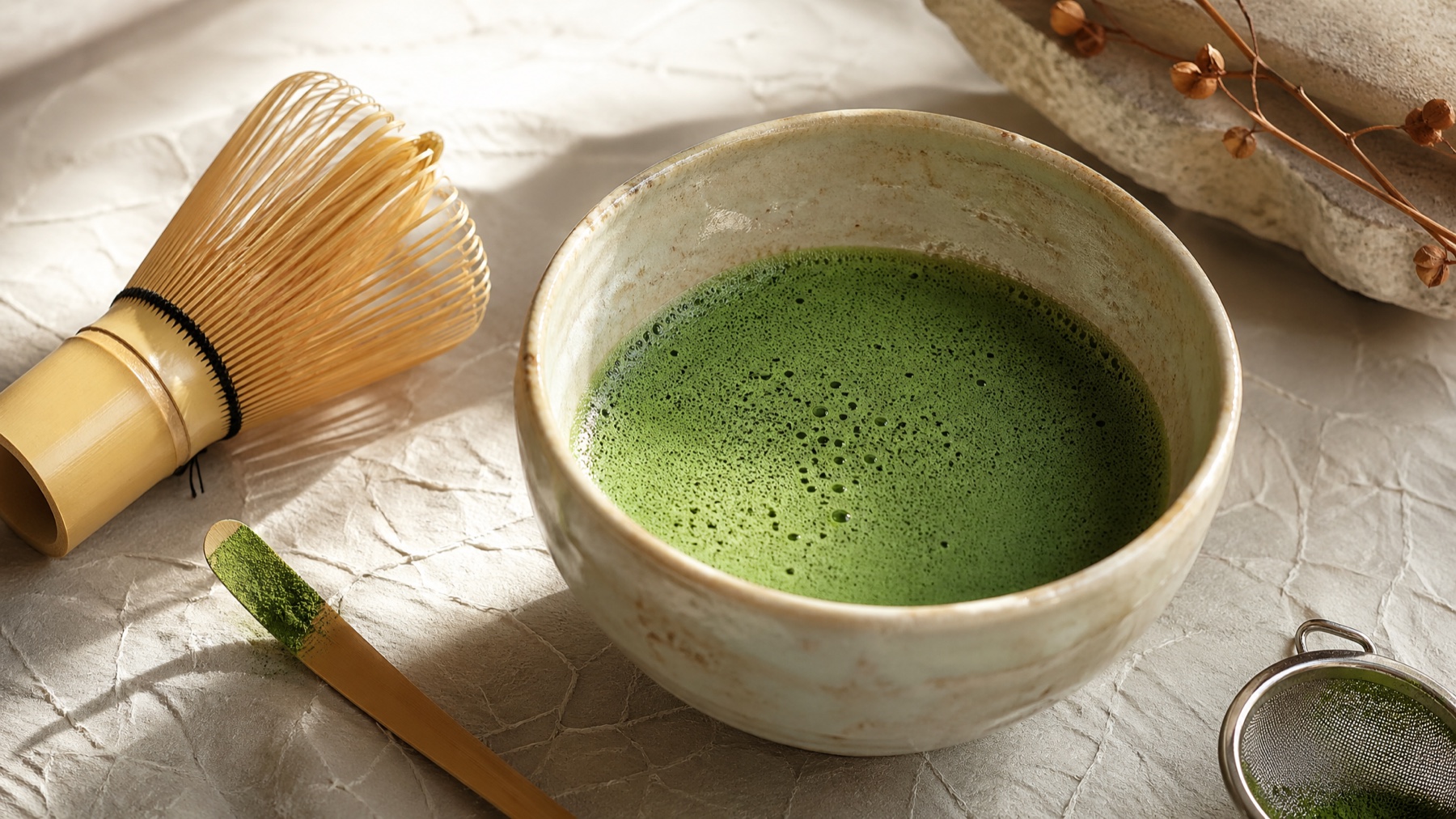
Powdered green tea
Matcha
Reviewed April 2026
Stone-milled Japanese green tea powder whisked into water. Because you drink the whole leaf, matcha tastes dense, vivid, and savory compared with steeped green tea.
What is matcha?
Matcha is finely stone-milled Japanese green tea powder whisked directly into water. Unlike steeped tea, you drink the suspended whole leaf, so matcha tastes more concentrated, vivid, savory, and creamy than most brewed green tea.
What does matcha taste like?
Typical notes: umami, fresh grass, cream, sea air, gentle bitterness when overdone
Top 5 to know
- Ceremonial usucha matcha
The daily whisked bowl standard.
- Single-origin matcha
Best for comparing cultivar, region, and producer style.
- Matcha latte powder
Stronger and less delicate, built to stand up to milk.
- Culinary matcha
For baking, smoothies, and recipes where subtlety disappears.
- Starter matcha set
Whisk, bowl, scoop, and sifter in one controlled path.
Good for
- A focused morning ritual
- Lattes with real tea flavor
- People who like precision and beautiful tools
Essential gear
Evidence notes
- Technique matters more than expensive accessories at first.
- Freshness and storage matter more than ceremonial marketing language.
- Community consensus favors buying from tea specialists over grocery matcha.
Common questions
Does matcha have more caffeine than steeped green tea?
Usually yes for a comparable serving, because matcha suspends and consumes the ground leaf instead of only steeping it.
Do I need a bamboo whisk for matcha?
A chasen is the most reliable tool for a smooth bowl. A frother can work for lattes, but it changes the texture and ritual.
Sources checked
Supports: Matcha preparation ratio, water range, and whisking method.
Accessed 2026-04-30
Supports: Specialist context for matcha sourcing, tools, and preparation.
Accessed 2026-04-30